
You shouldn't become a journalist until your frontal lobe develops
That's just my opinion!!!!

When I was growing up, I didn’t really know I wanted to become a journalist. Not always. In fact, up until I was 17 I was convinced I was going to be a childcare worker.
The only thing that stopped me was that I didn’t really want to stay in my hometown and I knew if I started studying it there, I probably wouldn’t leave. Also, I worried about the salary and that if I started looking after other people’s kids, it may mean I wouldn’t have time or patience for my own.
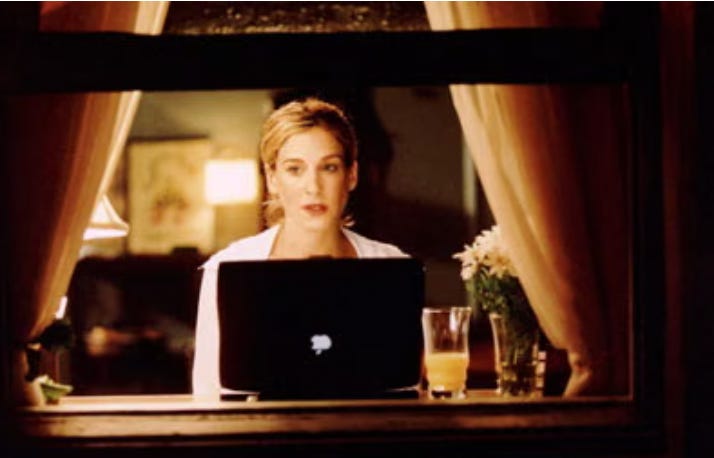
I always wanted to be a writer, but I imagined it in the way Carrie Bradshaw set us up for failure. You can type out your cute, quirky, extremely vanilla column and call it a day.
But I read my Nonna’s magazines front to cover, knew an insane amount about Jennifer Aniston’s baby heartbreak over the years (gosh, she was “pregnant” 77 times, at least), and I figured becoming a journalist would be an OK option. Because the other option I was delving into at 18 was psychology, and I kinda thought if I couldn’t solve my own problems, why would I try to solve anyone else’s?
(Which is funny when you realise a lot of psychologists became psychologists because they were just trying to solve their own problems).
The media industry right now feels pretty grim. Less than 10 years ago I was having the time of my life writing for a site that felt like a community, helping build a brand that felt fun and cheeky and witty. AI wasn’t something we were worried about, nor were we worried about writing for an algorithm.
Over time things have shifted and it’s not particularly for the better but it’s also nothing revolutionary. Just like print was the staple many moons ago, digital came, and content was regurgitated and plastered on sites getting millions of views, and now that happens over videos or vodcasts instead.
If you look closely at mass-produced online content, it’s rarely new ideas. Just different platforms.
“Back in my day, I could embed 17 tweets in an article, give it a funny headline, and call it a day,” I’ll say one day, locked in a padded room, talking to my imaginary grandchildren. “Sure, grandma!” they’ll say, in robotic voices.
The one thing I look back on now, when I think of myself as a baby journalist who got my big break interning for a women’s media outlet, is the stark naivety you have when you’re entering the field. You must prove yourself. You must be a team player. You must do what you gotta do, all in the name of content.
You go in embarrassingly enthusiastic, thinking your opinion means something, bouncy and shiny and full of energy and ideas.
You come out crumpled, dead-eyed and with terrible posture, then find yourself doing it all again, because somewhere, deep down, you still love the art and craft of finding a story.
But take it from me: maybe we shouldn’t be journalists until our frontal lobes develop.
When it comes to editorial and content judgment mishaps from the yesteryears? Lord, I’ve had a few.
Making a parody Twitter account of a former employer with two friends is definitely up there in my early journalistic mishaps, even if we were maybe ahead of our time on calling out the, uh, bullshit of the exploitation of a lot of young women. When you realise how small the media industry truly is, I wouldn’t advise it!
Lesson: Probably don’t do it, even if you kinda had a point.There’s a time in one’s life where virality means everything. Numbers become obsessive. When the dopamine of a viral piece hits, as you strive for more, you lose more little pieces of yourself along the way.
Staring at Google Analytics at 10pm at night is extremely unhelpful for your cortisol levels. The world isn’t going to explode and you won’t die if you miss a reality TV recap. You won’t be letting hundreds of thousands of people down, they won’t be storming your street, banging on your door, demanding one more funny little joke.
Lesson: In the wise words of Bethenny Frankel, GO TO SLEEP!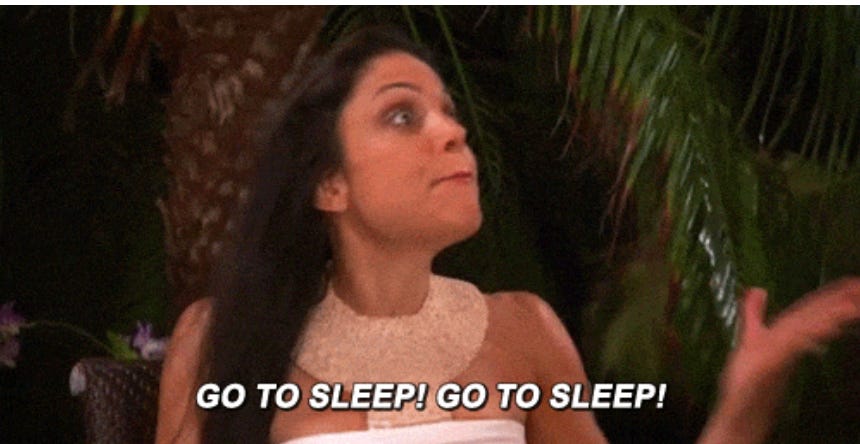
In such days, where you can publish lists like “17 ways we all killed our Sims” and hit over one million page views, there will be also so many ideas, some good, some very bad, and MANY that pick away at your identity.
That means the line between work and identity gets so totally blurred that even after 30 you struggle to remember if the motivated, hungry for a story, 20-something year old version of you is the real you, or if that was a fake you, performing for the masses.
Lesson: Your work doesn’t need your whole damn identity, and your whole damn identity sure as fuck shouldn’t be about work.Some bad content ideas, with the benefit of hindsight, include going bikini shopping with your fellow bigger-busted coworkers and getting photos taken in your bikinis to try and show the world how hard it is to go swimwear shopping in Australia if you have big boobs. At the time, none of you young ladies would blink an eye that you put your bodies out there for millions of people to see and comment on, for minimum wage at that.
Years later, when you talk about it and try to remember how or why that article was even approved in that format and why some company now technically owns bikini photos of you (that somehow thankfully vanished from the site), you’ll laugh about it being a fever dream. But could anyone persuade you to do that at 35? Absolutely fucking not.
Lesson: Bikinis are for the beach, not for work.Vulnerability and authenticity are words that get thrown around to demand more, more, more of you, until you have little left to give. Being asked to “share more” of yourself to a whole bunch of faceless strangers who then take it as an invitation to also critique you, isn’t always vulnerability, is it?
Lesson: Be vulnerable because you want to, not because people earning a much bigger pay cheque than you have tried to capitalise on it.You will find yourself in environments that feel unhealthily competitive and that will challenge your sense of self and boundaries. One day you’re so sick you’re bringing a whole new meaning to the word viral, but you’re pushing through because it’d be a bad look to be sick in your company “sprint” week, where you’re all tasked with competing with each other to get the most viral content.
Other times, you find yourself saying absolutely WANKY FUCKING THINGS like “I don’t read other entertainment journalists’ articles” because the narrative is that every youth media outlet competes with each other, as if anyone that reads your shit would even know or care about that.
Lesson: Take sick days and remember your core audience doesn’t care about inter-publication wars.When your frontal lobe isn’t fully all there, you’ll bitterly accept one boss’s reason that it’s YOUR fault you’re not on as much money as a man in your team doing the exact same job, because you didn’t fight hard enough for a pay rise. And because you cross your arms too much and don’t smile.
Lesson: Straight male bosses are hard work. There, I’ve said it.The importance of ego death as a journalist
There comes an age, probably post-frontal-lobe development, that we all experience ego death. It’s so necessary. Your writing isn’t better than anyone else’s. Your viral video may have got millions of views and that’s cool and whatever, but it’s not good enough to become your whole identity. Check in on your friends. Let them check in on you. Call your family. Go out and touch some grass. Detach a little. The yellow thing in the sky is the sun. It’s OK to be 3 minutes late to work if it feels good on your face.
Lesson: The internet doesn’t actually always need you and it sure as fuck doesn’t own you.
Loved and felt every word of this